
Sleep Apnea Brochure
More Than a Snore
“Sleep apnea… the not-so-silent killer”
Sleep Apnea Can Cause Many, Many Problems
Stroke
- Patients with moderate to severe OSA are 3x more likely to have a stroke
- The risk of stroke rises with the severity of the disease
- OSA is often found in patients following a stroke
Heart Problems
High Blood Pressure
Congestive Heart Failure
- Newly diagnosed patients should be screened for OSA
Cardiac Arrhythmias
- 4x as likely to have atrial fibrillation
Sudden Death
- Patients with OSA have a 30% higher risk of heart attack or premature death
Poor Sleep
- Many patients may not be aware of their poor sleep quality
Mood Disturbance
- Depression
- Anxiety
- Loss of motivation
- Shortened attention span
- Moodiness and bad temper
- Low testosterone
Daytime Sleepiness
- 7x more likely to have a car accident
- Impaired concentration and memory loss
- Reduced work efficiency
- Reduced alertness
- Slower reaction
Loud Snoring
- Relationship discord
- Morning headaches
Diabetes Type 2
- Treatment of sleep apnea may aid in the control of blood sugar levels
Obesity
- As sleep shortens or diminishes in quality, appetite for high calorie food increases
- Approximately 80% of OSA patients are overweight
Gastroesophageal Reflux Disease (GERD)
Possible treatment options are
- Weight loss
- Heartburn medications
- CPAP therapy (continuous positive airway pressure)
Sex Drive
- Loss of libido
- Erectile dysfunction
Frequent Night-time Urination
Chronic Pain
- Up to 80% of patients with fibromyalgia have sleep apnea
- 75% of patients treated with moderate to high doses of opioid have sleep apnea
Sleep Apnea
There are different types of sleep apnea.
Obstructive Sleep Apnea (OSA)
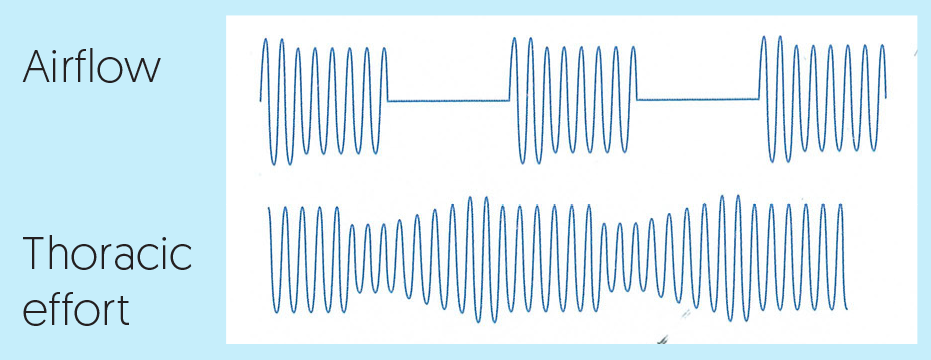
OSA is the absence of airflow due to an occlusion in the upper airway that lasts at least 10 seconds in spite of continual effort to breathe. Severity is measured by the Apnea / Hypopnea Index (AHI)—the number of episodes per hour of sleep.
Central Apnea and Periodic Breathing
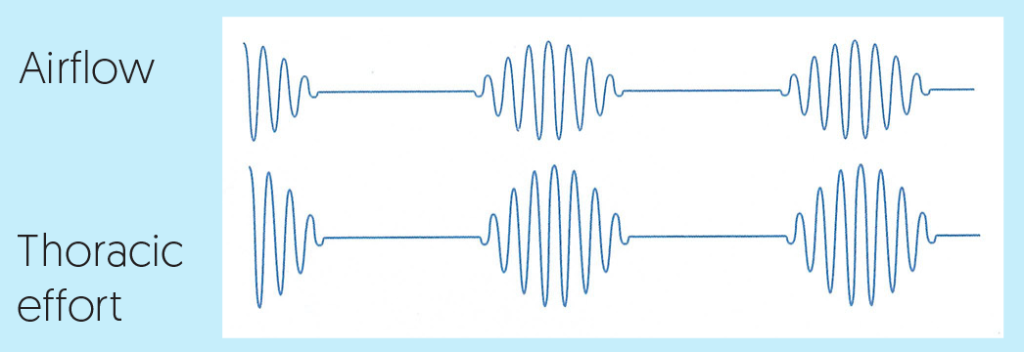
Central apnea is the absence of airflow that lasts at least 10 seconds with no inspiratory effort. Periodic breathing is defined as alternating periods of hyperventilation with waxing/waning tidal volume and periods of central hypopneas or apneas. There are many forms of periodic breathing, one of which is Cheyne-Stokes Respiration (CSR).
Prevalence of OSA
How common is sleep apnea?
- The prevalence of OSA is approximately 24% in men and 9% in women
- 1 to 5% of children are known to have OSA
- It is estimated that 85 to 90% of patients have not been identified 1
- One in four patients is at risk for OSA 2,4
Comorbidity—Sleep Apnea and Cardiac Disease
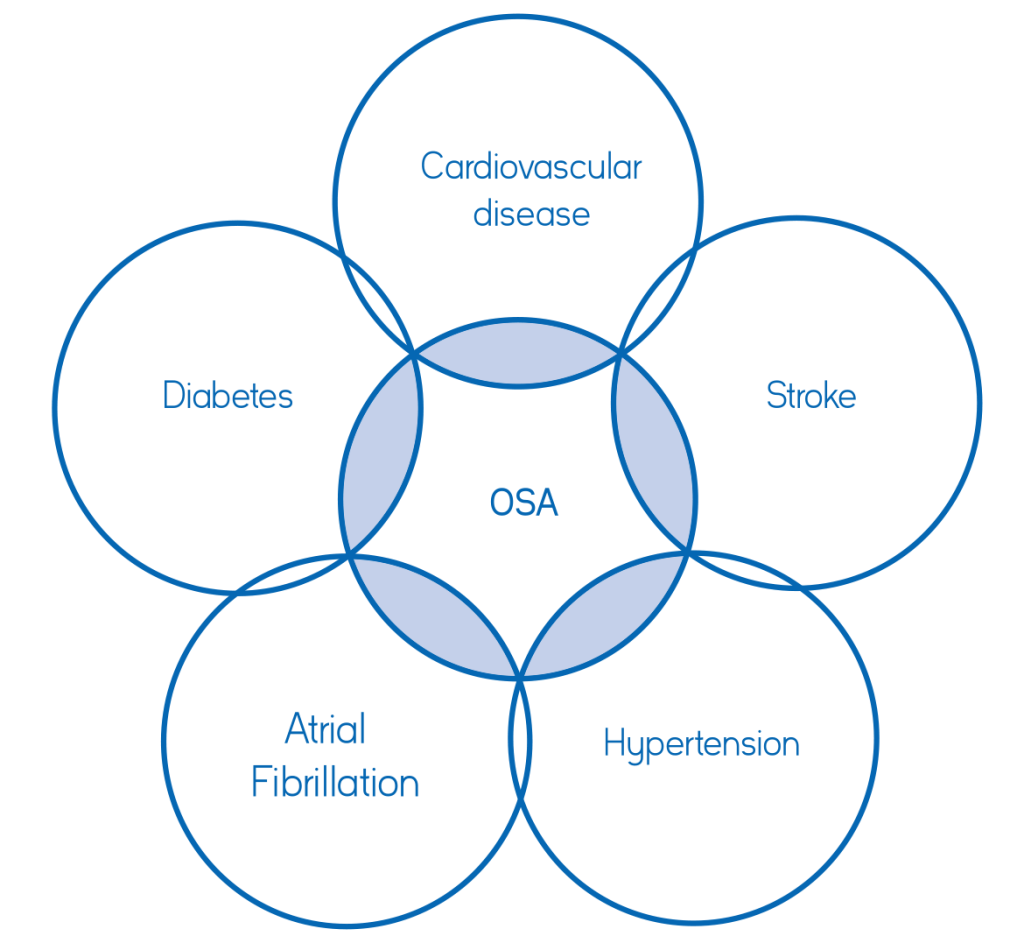
OSA has been independently associated with an increased risk of cardiac arrhythmias, hypertension, heart failure, stroke, Type 2 diabetes, and coronary artery disease. A large percentage of patients with OSA remains undiagnosed.
Sleep-disordered breathing (SDB) has been associated with various forms of cardiovascular disease.
- Individuals with severe SDB are 2 to 4 times more likely to develop complex arrhythmias than those without SDB. 5
- Individuals with diagnosed OSA are between 2 and 3 times more likely to develop hypertension. 6
- The prevalence of OSA in patients with heart failure is estimated at 40 to 70 percent. 7,8
- Individuals with diagnosed OSA are more likely to suffer a stroke than those without OSA. 9,10
- Type 2 diabetes is more prevalent in patients with SDB independent of the other risk factors. 11
Hypertension
- Sleep apnea has been associated with the development of hypertension in a dose-response relationship. 6
- NIH / NHLBI JNC7 recognizes OSA as an identifiable cause of hypertension and recommends screening newly identified hypertension patients or patients who develop refractory hypertension for OSA. 12
Heart Failure
- American College of Cardiology / American Heart Association Heart Failure Guidelines recognize OSA as a possible cause of heart failure and recommend screening newly identified heart failure patients for OSA. 13
Arrhythmias
- OSA is associated with a significant risk of atrial fibrillation, even after controlling for known confounding parameters. 14
- 49 percent of patients with atrial fibrillation have OSA, while 32 percent of the general cardiology practice have OSA. 14
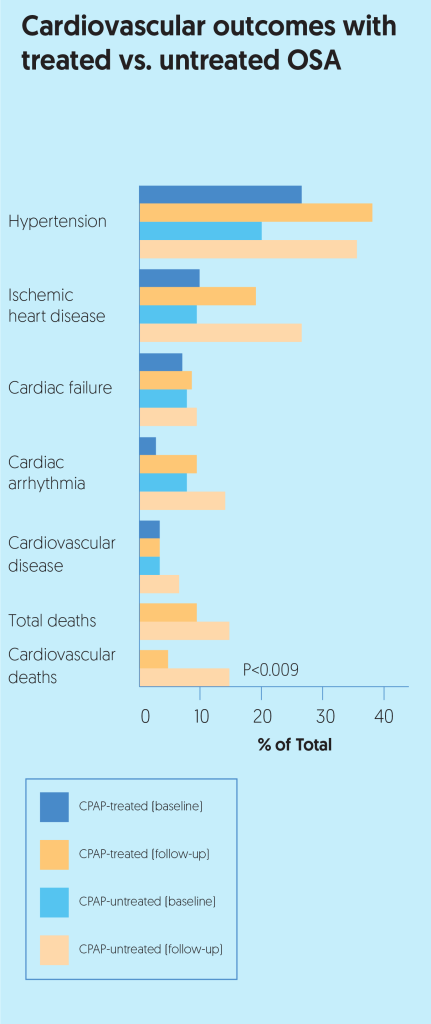
Cardiovascular Outcomes with Treated vs. Untreated OSA
Look at this chart to see the difference between treated and untreated obstructive sleep apnea. 16
Cardiovascular outcomes in patients treated for OSA vs. patients with untreated OSA:
- Patients with untreated OSA were 2.68 times more likely to suffer a non-fatal cardiovascular event compared to those whose OSA was effectively treated with CPAP. 15
- Patients with untreated OSA were 2.5 times more likely to suffer a fatal cardiovascular event compared to those whose OSA was effectively treated with CPAP. 15
Results of Effective Treatment of OSA
Treatment of OSA Can Positively Impact Hypertension
- Reduced daytime blood pressure in patients whose OSA is effectively treated 17,18,19,20
- Effective treatment of OSA resulted in reduced systolic blood pressure in refractory hypertension patients with OSA (avg. systolic BP reduced from 138.3 mm Hg to 126 mm Hg). 21
- Normalized nocturnal blood pressure pattern (restored dipper status) in a non-dipper OSA population whose OSA was effectively treated. 22
Treatment of OSA Can Positively Impact Heart Failure
- Effective treatment of OSA resulted in improved Left Ventricular Ejection Fraction percent (from 25% to 34%), Left Ventricular End Systolic Diameter (from 55 mm to 52 mm), and systolic blood pressure (from 126 mm Hg to 116 mm Hg) in heart failure patients with OSA. 23
- Significantly improved quality of life for heart failure patients whose OSA was effectively treated. 24
Treatment of OSA Can Positively Impact Arrhythmias
- Appropriate treatment of OSA was associated with a reduction in atrial fibrillation recurrence after cardioversion. 25
- Untreated OSA is associated with an increased rate of occurrence of atrial fibrillation and severity of nocturnal oxygen desaturation. 25
Treatment of OSA with CPAP Therapy
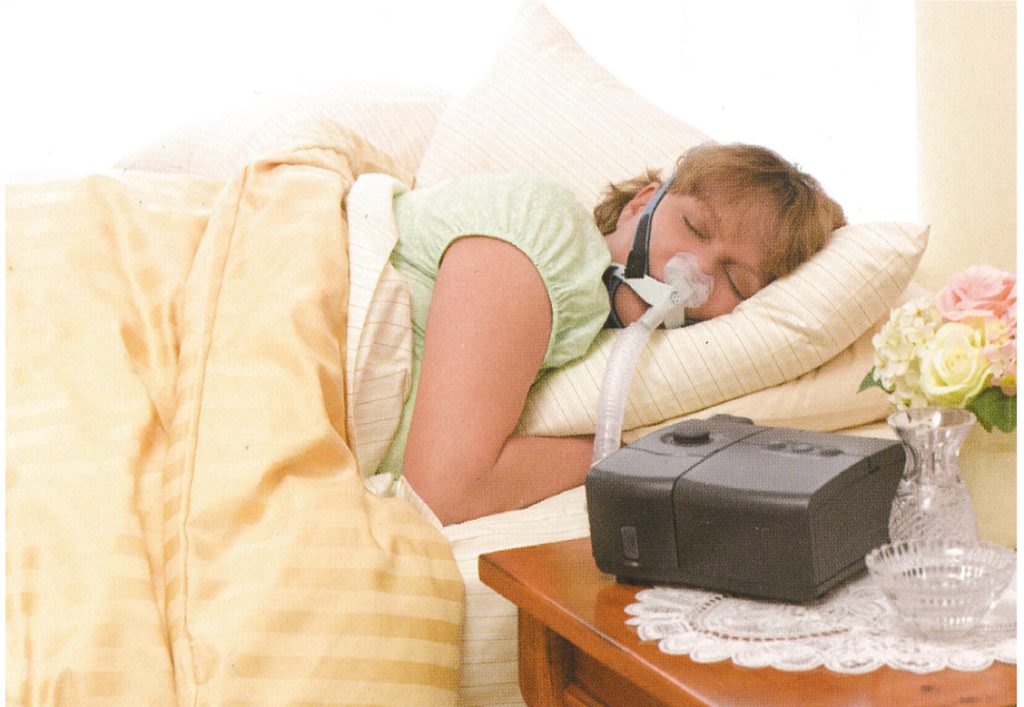
Continuous Positive Airway Pressure (CPAP) treats OSA by providing a pneumatic splint to keep the patient’s airway open during sleep. Treatment of OSA with CPAP therapy improves sleep-related breathing. Adequately treated OSA also has been associated with improved cardiovascular outcomes.
Notes
1. Young, T., et al., NEJM 1993;328:1230-1235
2. Young T., et al., AJRCCM 2002;165:1217-1239
3. O’Connor, et al., Sleep 2003;26(1):74-79
4. Hiestand, D.M., et al., Chest 2006;130:780-786
5. Mehra, R., et al., AJRCCM 2006;173:910-916
6. Peppard, P., et al., NEJM 2000;342:1378-1384
7. Javahari, S., Curr Treat Options in CV Med 2005;7:295-306
8. Sin, D., et al., AJRCCM 1999;160:1101-1106
9. Yaggi, H.K., et al., NEJM 2005;353:2034-2041
10. Arzt, M., et al., AJRCCM 2005;172:1447-1451
11. Reichmuth, K.J., et al., AJRCCM 2005;172:1590-1595
12. Chobanian, A.V., et al., JAMA 2003;289:2560-2571
13. Hunt, S.A., et al., Circulation 2005;112:1825-1852
14. Gami, A.S., et al., Circulation 2004;110:364-367
15. Marin, J.M., et al., Lancet 2005;365:1046-1053
16. Doherty, L.S., et al., Chest 2005;127:2076-2084
17. Hla, K.M., et al., Chest 2002;122:1125-1132
18. Faccenda, J.F., AJRCCM 2001:163:344-348
19. Pepperell, J.C., Lancet 2002;359:204-210
20. Heinrich, F., et al., Circulation 2002;107:68-73
21. Logan, A.G., et al., Eur Respir J 2003;21:241-247
22. Akashiba, et al., Sleep 1999;22(7):849-853
23. Bradley, T.D., et al., NEJM 2003;348:1233-1241
24. Naughton, M.T., et al., AJRCCM 2004;169:361-366
25. Kenaglala, R., et al., Circulation 2003;107:2589-2594
Schedule a Sleep Evaluation
Please give us a call if you would like to schedule an appointment or a sleep evaluation.