
When Your Brain Forgets to Breathe at Night
Central sleep apnea is less common than the obstructive type, and it happens for a different reason. Your airway stays open, but the brain briefly stops sending the signal to breathe. At Advanced Center for Sleep Disorders, our sleep medicine team diagnoses and manages central sleep apnea for patients across Chattanooga, Cleveland and Tennessee, and Ringgold and North Georgia. We find the cause and match treatment to how your breathing actually behaves during sleep.
Request an AppointmentWhat Is Central Sleep Apnea?
In central sleep apnea (CSA), breathing pauses because the brain’s respiratory control center does not signal the chest and diaphragm muscles to work. In obstructive sleep apnea, the throat collapses while the body keeps trying to breathe. In CSA there is little or no effort to breathe during each pause. The pauses lower oxygen levels and break up sleep many times an hour, often without the person knowing it.
Some patients have both types. Others develop central events after they start CPAP for obstructive apnea. This is called treatment-emergent or complex sleep apnea. Because the types overlap, an accurate diagnosis matters before treatment begins. Our sleep disorder services start with that diagnosis.
Common Causes and Types
- Cheyne-Stokes breathing: a cycle of breathing that slowly rises and falls, often linked to heart failure or stroke.
- Medication- or substance-induced CSA: most often caused by opioid pain medicines, which can dull the brain’s drive to breathe.
- Treatment-emergent central apnea: central events that appear after positive airway pressure therapy begins.
- High-altitude periodic breathing: unstable breathing that develops at higher elevations.
- Medical conditions: kidney failure, neurological disorders and brainstem problems can affect breathing control.
- Idiopathic CSA: central apnea with no clear underlying cause.
Signs to Watch For
Loud snoring is often less obvious with central sleep apnea than with obstructive apnea. Common signs include:
- Pauses in breathing that a bed partner notices
- Waking suddenly short of breath
- Trouble staying asleep, which can look like insomnia
- Excessive daytime sleepiness and fatigue
- Morning headaches
- Poor concentration, memory lapses or mood changes
Daytime sleepiness can also come from conditions such as narcolepsy or circadian rhythm sleep disorders. A full evaluation helps separate these possibilities.
How We Diagnose Central Sleep Apnea
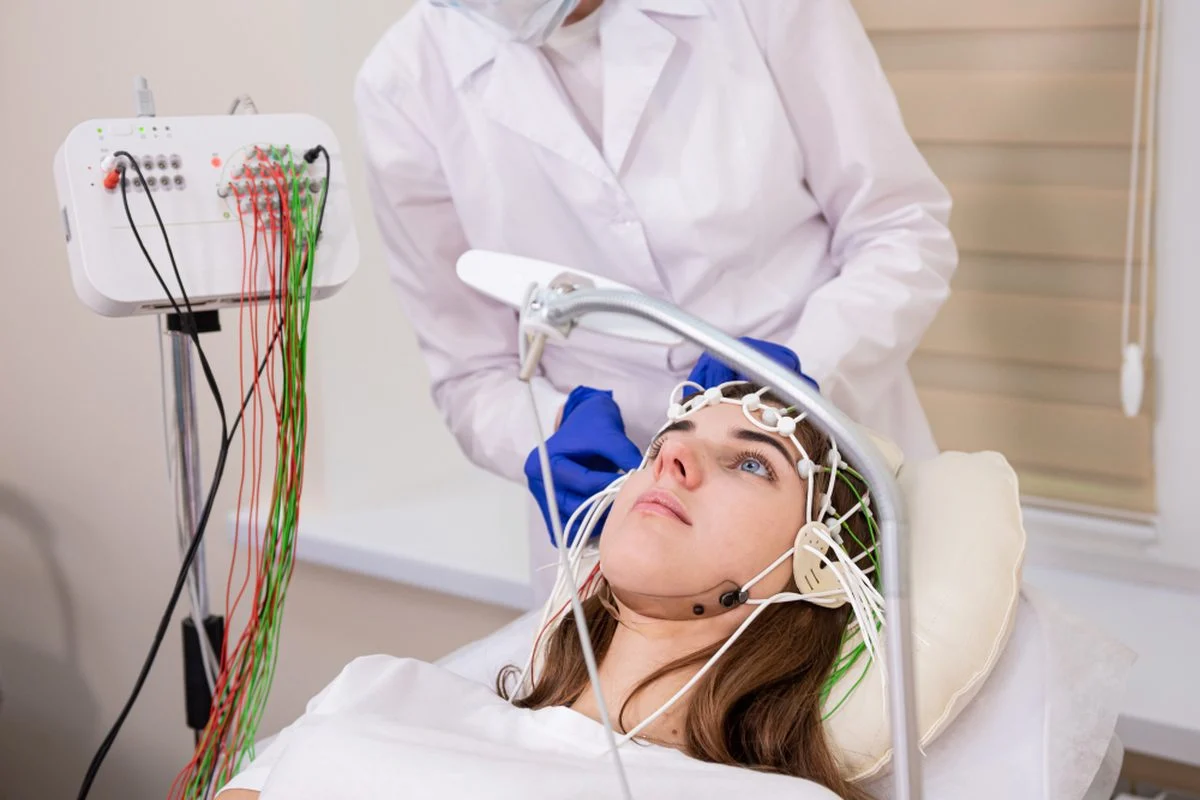
Diagnosis starts with a visit with one of our sleep medicine providers. We review your symptoms, medications, heart and neurological history and any sleep testing you have already had. An overnight in-lab sleep study (polysomnography) is usually the most reliable way to identify CSA. It records brain activity, airflow, breathing effort, oxygen levels and heart rhythm, so we can tell central pauses from obstructive ones. Home sleep tests are useful for many patients, but they can miss central events or misclassify them.
Treatment Options
Treatment depends on what is driving the apnea. It may include:
- Treating the underlying condition: working with your cardiologist or other physicians when heart failure, stroke or another illness plays a role.
- Medication review: coordinating with your prescriber when opioids or other medicines affect breathing.
- CPAP therapy: continuous positive airway pressure helps some patients, especially when obstructive events are also present. Our CPAP troubleshooting and travel tips can help you adjust.
- Bilevel PAP with a backup rate: delivers a breath if your body pauses too long.
- Adaptive servo-ventilation (ASV): a device that adjusts pressure breath by breath to steady irregular breathing. ASV is not appropriate for everyone, including some patients with certain types of heart failure. Your provider will check whether it is safe for you.
- Supplemental oxygen or other therapies: considered in specific situations.
A comfortable fit is important with any device. Our guide to CPAP mask fitting and adjustment covers common fixes. For a quick overview of sleep-disordered breathing, read our sleep apnea brochure.
Care Close to Home in Tennessee and Georgia
Patients can be seen at our Chattanooga sleep clinic, our Cleveland sleep clinic or our North Georgia sleep clinic in Ringgold. Sleep testing is available at our dedicated testing locations. See all of our sleep clinic locations to find the most convenient one, or learn why patients choose us.
Central Sleep Apnea FAQs
How is central sleep apnea different from obstructive sleep apnea?
In obstructive sleep apnea, the airway collapses while the body keeps trying to breathe. In central sleep apnea, the airway stays open but the brain briefly stops sending the signal to breathe, so there is little or no breathing effort during each pause.
Does central sleep apnea cause snoring?
Snoring is usually less prominent with central sleep apnea. Many patients instead notice frequent awakenings, waking short of breath, poor sleep and daytime fatigue. A bed partner may see pauses in breathing without much snoring.
Can a home sleep test diagnose central sleep apnea?
Home sleep tests can suggest central events, but they often cannot measure breathing effort accurately. An in-lab overnight sleep study is usually the most reliable way to confirm central sleep apnea and tell it apart from obstructive apnea.
What health problems are linked to central sleep apnea?
Central sleep apnea is often associated with heart failure, stroke, kidney disease, certain neurological conditions and long-term opioid use. It can also occur at high altitude or with no clear cause.
Will CPAP work for central sleep apnea?
CPAP helps some patients, especially when obstructive events are also present. Others do better with bilevel therapy with a backup rate or adaptive servo-ventilation. Your provider will recommend a device based on your sleep study results and overall health.
What is complex or treatment-emergent sleep apnea?
It describes central breathing pauses that appear after a patient starts positive airway pressure therapy for obstructive sleep apnea. It sometimes settles with time. If it continues, the device settings or type of therapy may need to change.
Where can I be evaluated for central sleep apnea?
Advanced Center for Sleep Disorders sees patients at offices in Chattanooga and Cleveland, Tennessee, and Ringgold, Georgia. Call (423) 648-8008 or request an appointment online to schedule a sleep evaluation.
Get Answers About Your Nighttime Breathing
If you wake up gasping, feel tired no matter how long you sleep, or have heart or medication concerns that affect your breathing, a sleep evaluation can show what is happening at night. Call Advanced Center for Sleep Disorders at (423) 648-8008 to schedule a visit in Chattanooga, Cleveland or Ringgold.